Current
Issue
Fall 2026 / Volume 13.1


Inside the cosmic egg inhabit some minor corner and become warmed
Become warmed, there is very little to see: remnants, radiation
Remnants, radiation, it is better to think with an unaided eye and a central piece torn out
Torn out and perhaps under the influence of nuclear ash
Ash and spinning things expose a universal order: form and abundance
Form and abundance have a story to tell: occasionally the loveliest of rare irregulars is human
Humans have luminous cores made mostly of nothing
Made mostly of nothing space stretched
Space stretched yet nothing we can ever know was outside the collective motion
The collective motion then as now filled the universe careening
Careening mathematical points fall in and out of spiral arms, perhaps dust lanes, perhaps embracing
Embracing because the suicide rate is high and the universe is indifferent
Indifferent to collisions, grace, decay and adolescence
Adolescence, a fixed pitch receding
Receding into a field of red-shifts corresponding with creatures puny as we
As we have a tendency to distort and a tendency to dance
Dance because gravity is opportunistic and falling bodies fall towards beams of pure yellow light
Light travels perfectly well
Well, there is something very massive, very dense, and very small ticking and purring inside
Purring inside this axis of rotation, the arms trailing, not leading, what were then the clear skies
The clear skies and creation myths
And creation myths, like humans, occasionally blowing themselves up
Up in the velvet of intergalactic space it became clear: it's better to fluctuate in brightness than to
think
To think is to carelessly throw dust about
About ten or twenty billions years ago something happened
Something happened: space became dark
Note: Every word in this poem appears in Carl Sagan's Cosmos. The italicized selections are direct quotes.
* Intended to be read on larger screens. Mobile and narrow browser windows break the original format of this poem.
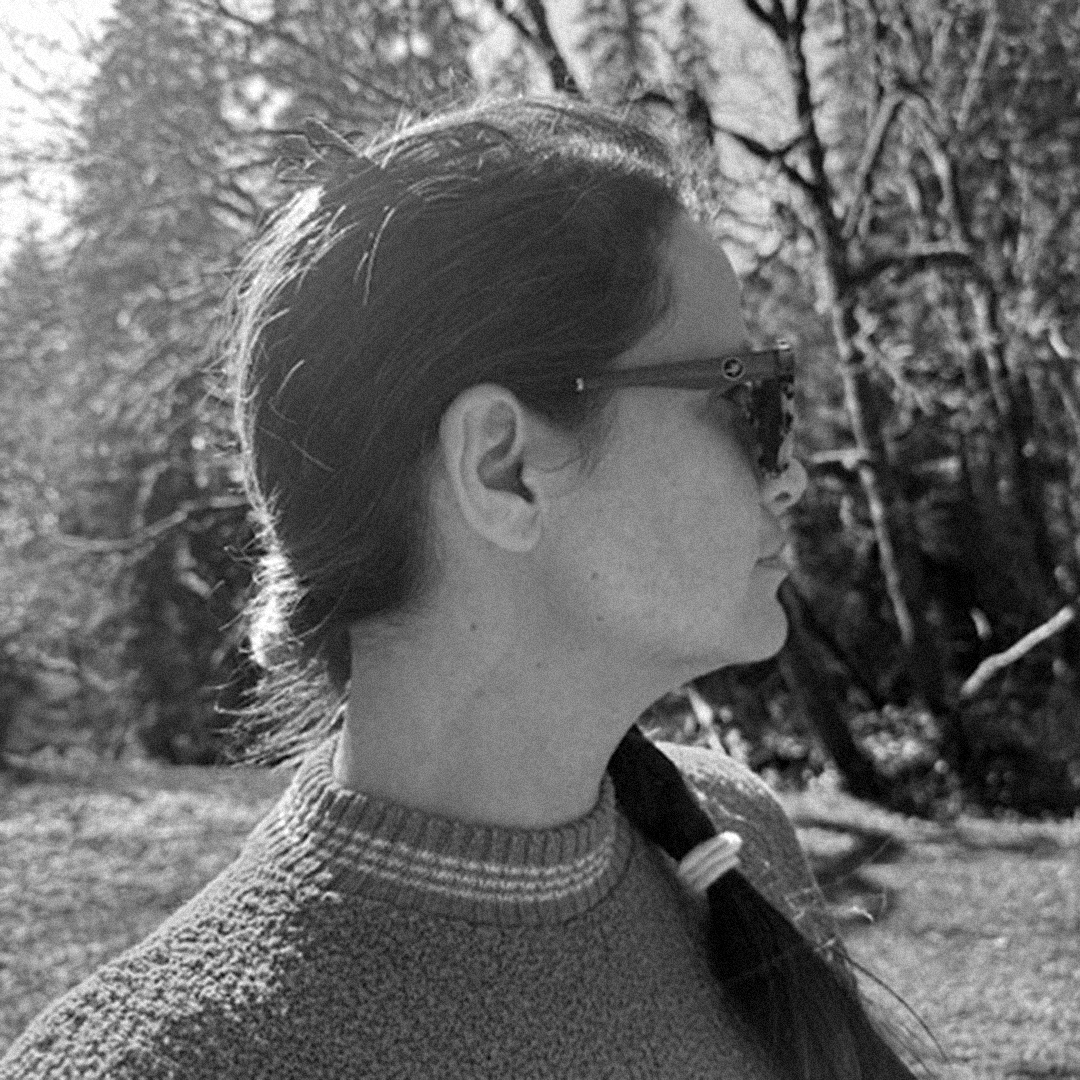
Eliza Rotterman was born in Cincinnati, Ohio. She earned her MFA in poetry from the University of Oregon and has received fellowships from the Vermont Studio Center and Oregon Literary Arts. Her chapbook Dirt Eaters was published by Tupelo Press in 2018 and was a finalist for the Oregon Book Award. Her poem Tulips won the 2026 PSA Emily Dickinson Award. She lives in Eugene with her family and is a neurotrauma ICU nurse.
