

Tania Langlais (trans. Jessica Cuello)
—
Monk’s House, East Sussex
we let summer
sink us
at last
I learned by heart
your suicide note
after crying for days
in the Bloomsbury apartment
Monk’s House, East Sussex
laisser l’été enfin
prendre le dessus
j’ai appris par coeur
ta lettre de suicide
après avoir longtemps pleuré
l’appartement de Bloomsbury
You never again
work in the greenhouse
you do what little
you can
to care for yourself
and at 11:00 o’clock
write
a farewell letter
no one
understands
tu n’arrives plus à travailler
dans la maison du jardin
tu te soignes comme tu peux
à onze heures tu écris
une lettre d’adieu
incommunicable
His heart grows weak
nothing can be done
below
is the unlivable
and shallow sea
he writes:
I wait for you
at Southease Station
son coeur faiblit
on n’y peut rien
il y a la mer tout en bas
inhabitable et secouée
il écrit je t’attends
gare de Southease
If you return
it will be July
and you, radiant
beside the fields
will tell us
how you swam
a long time
struck
by a strange sickness
watching the seagulls
si en juillet tu revenais
resurgie radieuse
du côté des champs
tu dirais
longtemps je me suis baignée
guettant les mouettes
frappées d’un mal étrange
You don't dare
look at your hands
you weep
and faintly erase
Percival’s life
one vertebrae at a time
tu n’oses plus regarder tes mains
tu pleures
imperceptiblement tu nettoies
la vie de Perceval
une vertèbre à la fois
Translator’s Note from Jessica Cuello
Quebecoise poet Tania Langlais’ most recent book, Pendant que Perceval tombait, draws from overlapping sources: literary fiction, literary biography, and a third voice which enters subtly, the voice of the poet. This book-length poem occurs over the course of a single day and encompasses both the day of Woolf’s suicide and the death of the character Percival from Woolf’s novel The Waves. It’s striking in its spareness and structure. I have read nothing else like it. I was fortunate to zoom with Langlais and, while she is a poet reluctant to discuss her work directly, she revealed that the book originated from a grant to explore the character Percival from Virginia Woolf’s The Waves and quickly became a poem obsessed with Woolf—not, she asserts, from a perverse curiosity with her suicide, but from a compassion for the woman that Woolf was, a woman trying to heal.
To enter this book is to enter a state of grief, to negotiate with “la douleur.” During my conversation with Langlais, our conversation turned intimately to the repetitive language of grief. Perceval is composed of a cycle of recursive images; they contain a wavelike rhythm and the insistence of galloping hooves. Like The Waves, multiple narratives are present and so it wasn’t initially clear whether lines referenced Woolf or the character Percival. Langlais says in an March 2021 interview that Pendant que Perceval tombait is a casse-tete (puzzle) and I discovered that the more I trusted myself and took risks, the more the poem opened, much in the way that a riddle reveals itself. The poem rejects a linear progression and the separate poems are almost interchangeable. Their order is not what counts, but the sense of recurrence. I had to take care to translate recurring lines consistently because repetition is deeply attuned to the nature of grief in the poem. Without it the exceptional beauty of the book would be lost.
If translation is the longing to near another, an idea I got from translator Philip Metres, this particular translation is a longing not only to recreate the work of Langlais, but to honor Woolf. A young friend of mine would call this fan-fic, but I believe it speaks to an older love, one from childhood—of writers and their worlds. The fact that in this book these two worlds—fictional and real—intersect without demarcation is poignant too. Often our relationship with a literary work is as real as any relationship, just as any relationship with a writer we have never met can feel intimate and life-changing, a stay against loneliness.

Tania Langlais is the author of Douze bêtes aux chemises de l’homme and she received the Prix Émile-Nelligan at age 20, the youngest person to ever receive this award. Born in Montreal in 1979, she currently lives in Outaouais. Pendant que Perceval tombait is her fourth book and was awarded The Governor General's Award of Canada and Le Prix Alain-Grandbois de l'Académie des lettres du Québec. Her work has not yet been translated.
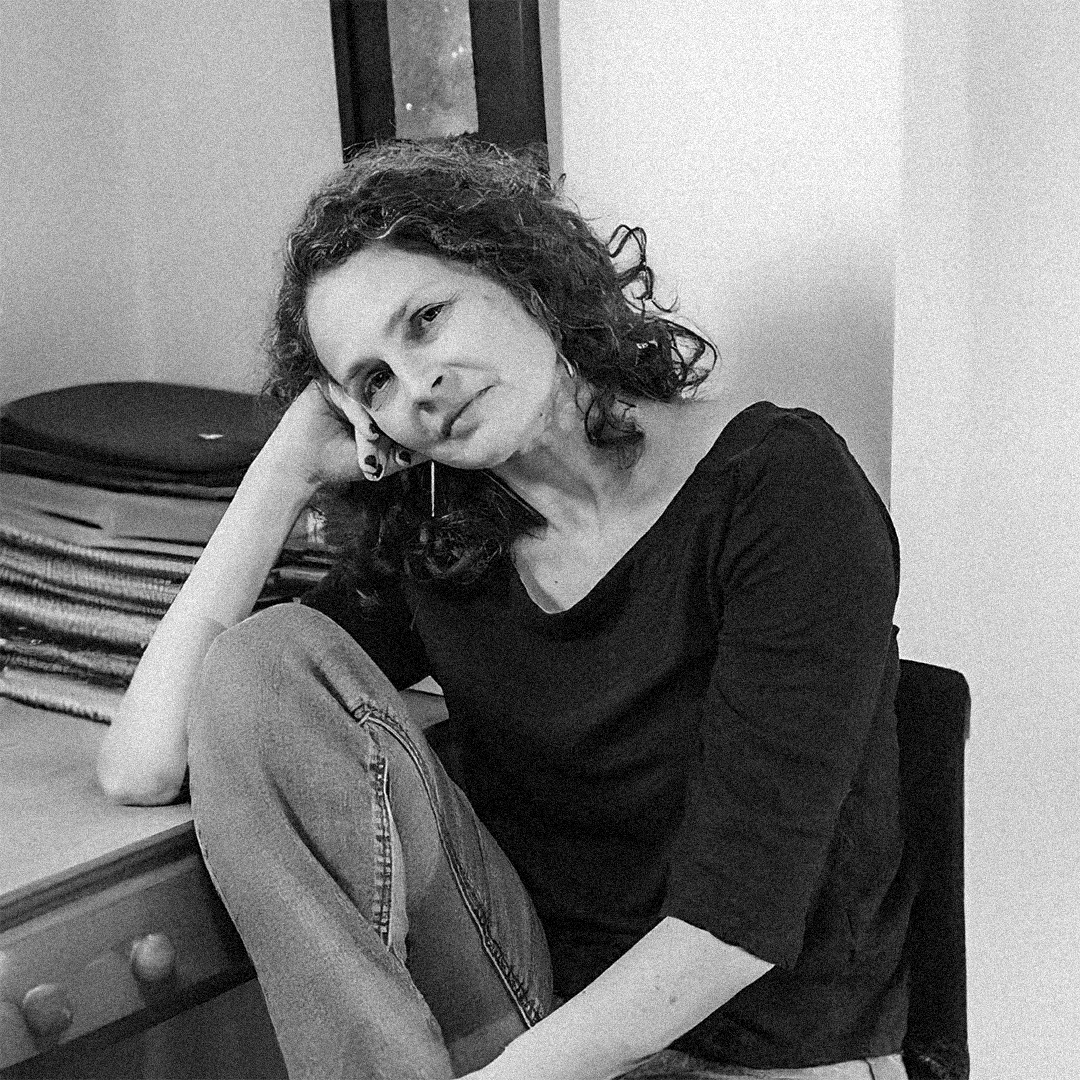
Jessica Cuello’s newest book, Feral, is forthcoming from JackLeg Press in 2027. Cuello is the author of four other books. Her book Liar was selected by Dorianne Laux for the 2020 Barrow Street Poetry Prize. Cuello is the recipient of a 2023 NYSCA Artist Grant and is poetry editor at Tahoma Literary Review. She teaches French in Central NY.
© Bear Review 2025
ALL RIGHTS RESERVED
Site Design + Build
October Associates
