Jenny Maaketo
2022 Michelle Boisseau Prize Finalist
—
Another Month, Another Red Question
Every blood clot from between
these lips is another breath less
or lost, never from our making.
I listen to the insect symphony recede
with first light, wipe front to back.
My eyes follow the flush of color,
a blur of blood and waiting names
that recede too for another month
with water and the closed toilet seat.
These names sound out our songs
of ram or gem, though we dare not
sing them yet. Their lyrics are dreams
that fall from me with the speed
of a silk slip. I wrap myself
in a terry cloth robe the way I wanted
Mother to hold me, the way I know
I would cradle you, and rock you,
not the way I am now, alone on the front porch
with Matt still waking upstairs. I sit still and sip
a cup of alchemy—which is my green tea,
milk, and honey. I watch the day become
from dew and soft sounds
as a hummingbird hovers to drink
from the spider lilies
my Matt spotted just last week.
Two clusters of red, then three, then more
in our field of green, wild and overgrown.
To see this tiny, blur-winged bird
drink from blooms as red
as frank blood—how nature makes
life’s bud from life seem as effortless
as months passing. This should be
enough, shouldn’t it? This hummingbird
suckling from the center of this and that red—
This should be my answer.
Look! Do you see it? The monarchs are mating
like a waltz above me
into the warm air—
Interview
—
BR: Can you tell us the story of your Michelle Boisseau Poetry Prize Finalist poem? What experiences did it grow from? Who or what inspired it? What was it like to write and revise it?
JM: As fate or God or chance would have it, many of my life goals converged within the span of a few years. In the spring of 2021, I met my husband-to-be. Matt proposed to me the next year at The Dallas Zoo on my 38th birthday. That same spring, I accepted the offer of a fully funded candidacy for poetry in the MFA creative writing department at the University of Mississippi. Matt and I were in a place in our lives as well as our relationship where we knew we wanted to buy a home together. We were in the process of selling Matt’s condo when I got the call from Beth Ann Fennelly with the news of a place for me in the fall 2022 cohort. Matt has always wanted to “live off the land” as he says, so with the sale of his home, we were able to buy a 66-acre homestead just 15 minutes outside of Oxford, MS. After my first semester of grad school, Matt and I married on December 18th, 2022, with an intimate ceremony back in our hometown of Austin, Texas.
My husband and I are both almost 40. We became a couple at 37, and though Matt and I didn’t want to rush enjoying the first years of our relationship, we knew we wanted to have a family together. The research articles and testimonials about infertility that abound on social media only serve to heighten potential anxiety. With every passing year, a woman in middle age can begin to feel as if her waning fertility could be measured with time kept by an hourglass. Even with the reassurance of fertility testing, I wondered just how many grains of sand I had left in the glass before it was too late to conceive naturally. Not knowing what would be in store for our fertility story, Matt and I didn’t want to wait until after I finished my MFA to begin trying to conceive.
There I was in my first semester as a grad student at UM, reacclimating myself to higher education after many years away from the rigors of academic life, in my first graduate-level poetry workshop, juggling my duties as a T.A., taking my first literature classes since high school, all while quietly trying to get pregnant. “Another Month, Another Red Question” grew from this anxiety over potential difficulties with conception. I wrote the first draft by hand in my journal, as is my habit, one morning while enjoying tea on our front porch, sitting, rocking in the rustic rocking chair Matt and I just bought, and surveying the natural landscape we newly called home. My period had just come, and I wondered how many more months of blood would have to come before I would be pregnant.
This was what occupied my mind when I began to write my lines that morning. Throughout my life, I’ve found nature to be a welcome escape from what overwhelms and challenges me emotionally. With this escape, comes unexpected answers to some of my most pressing questions, answers spoken in the wild breath of unknown when one is open only to their senses.
It’s funny, being an older, non-traditional grad student in a cohort with fellow poets who are mostly in their early to mid-twenties, a poem that to me was clearly about the unknown before conception, was less than clear to my peers upon a first read. It’s safe for me to assume that attempting to conceive was not an endeavor that had yet entered the headspace of any others in my cohort. As a result, my subsequent edits entailed making the anticipation of conception more obvious in my metaphors and imagery.
BR: Does this piece come from a manuscript of related poems? If so, what work do you see it doing as you’ve put it in play with them? If not, how do you see each poem you write and “keep” in relation to those you’ve already written and those you’ve yet to write?
JM: My current book project encompasses themes of mental illness that stem from personal experiences growing up in a family system with a parent who still suffers from a chronic mental illness, as well as my time as a psychiatric nurse caring for thought disorder patients in the psych ICU of an acute psychiatric hospital.
I’m not sure “Another Month, Another Red Question” fits into this manuscript, but (spoiler alert), as I’m currently pregnant, I anticipate this poem fitting quite nicely at the beginning of my next book of poems. I’m the type of poet who writes directly from their personal life. I see this poem marking a new chapter, or in a poet’s case, a new chapbook of my life. I’ll be taking a leave of absence from my MFA program to focus on my new role as a mother. I expect by the end of my leave, I’ll have many more poems for a collection about all the firsts of motherhood and infancy.
BR: Can you tell our readers about your process for making a poem? Any specifics you can think of would be fascinating to our readers.
JM: I’m a firm believer in the unnamed, unknown source of creative inspiration. My process begins with the liminal space we poets manifest with silence, solitude, unbridled time, and the blank page. As a connoisseur of fountain pens and bound journals, I know that for me, there’s a direct link between the kinesthetic process of writing by hand and my access to the creative impulse. Sometimes I come to the page with a thematic and/or form-informed intention, but most of the time, I come to the page without knowing what the creative source will give me at any given moment. That kind of surprise is what I love about the unpredictability of creativity.
My next step involves returning to my journal with a discerning eye and determining what first drafts are worth a second edit. Those poems deemed worthy enough are typed into my laptop. From there, I return to the Word document again and again. For me, the editing process often involves countless iterations of adding, cutting, tweaking, and rearranging lines, finessing line breaks, and agonizing over the title, beginning, and ending, until by my gut, I feel a poem may be ready to find a home with publication.
Even during the submission period, with every new round of submissions, I find myself continuing to tinker with a poem. It’s rare for a poem to retire from its tenure with editing, even after it is published. When I minored in playwriting as an undergraduate, my mentor Suzan Zeder taught me early on that 99% of writing is in the endlessness of editing.
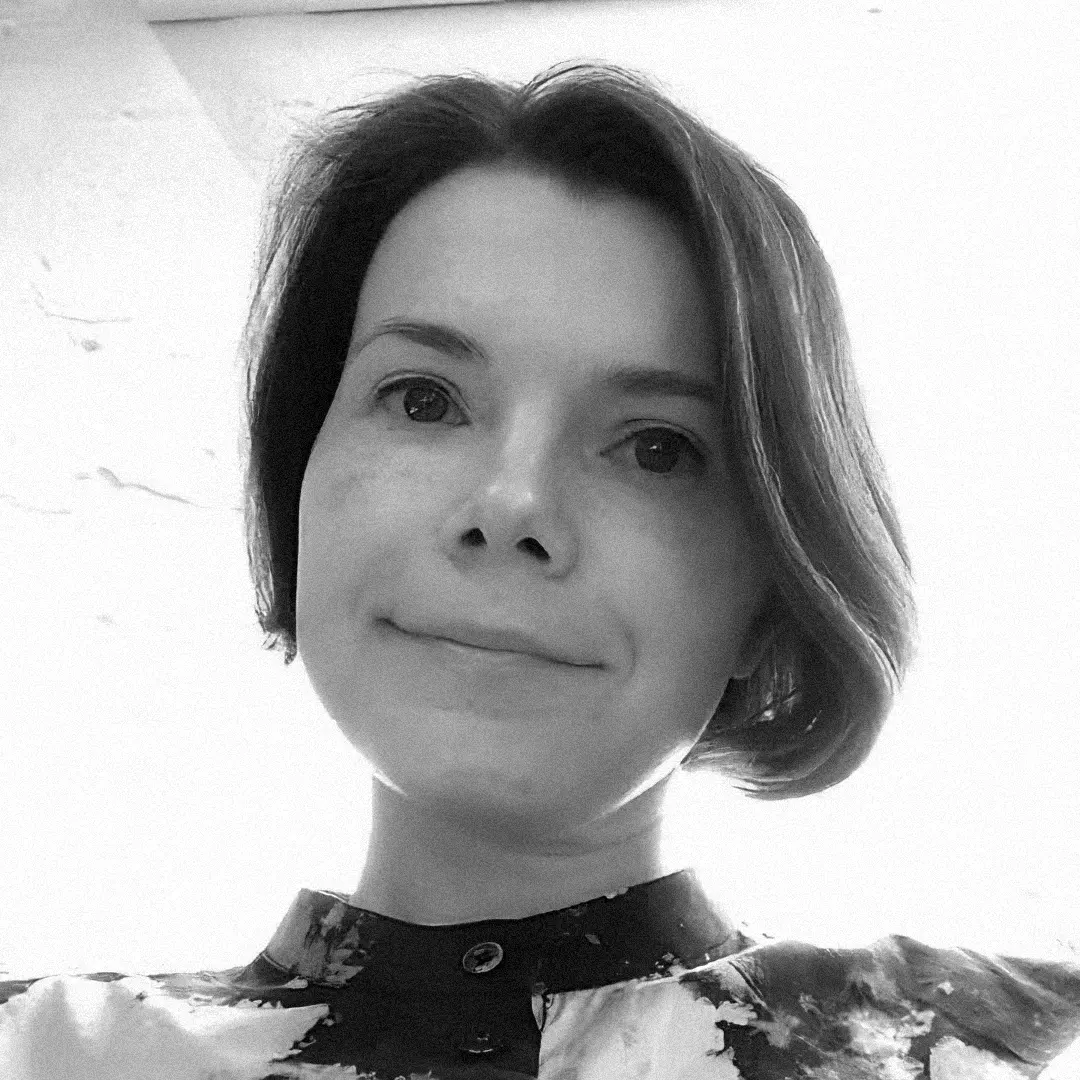
Jenny Maaketo (she/her) is a neurodivergent poet, psychiatric nurse, former professional actor, and first-year poetry candidate in the MFA Creative Writing program at the University of Mississippi. She was named runner-up in the 2022 Patty Friedmann Writing Competition and her poems appear or are forthcoming in Cordite Poetry Review, The Peauxdunque Review, The Madison Review, Ponder Review, Gris-Gris, Cathexis Northwest Press, Host Publications, and Francis House among others. She lives in Abbeville, Mississippi on 66 acres with her husband, four dogs, two cats, and lots of love.
© Bear Review 2025
ALL RIGHTS RESERVED
Site Design + Build
October Associates
