

Sally Rosen Kindred
—
Fairy Tale for Hydroxychloroquine, 400 mg Daily
It is not clear why hydroxychloroquine is effective at treating autoimmune diseases.
It is believed that hydroxychloroquine interferes with communication of cells
in the immune system. — Rheumatology.org
Each morning you swallow a wolf. Something
in the body, maybe a girl, drops
her bucket, her knife, wanders over
to find twilight drifting in his plush
and answers his rainy cry, thumbing the soft
spell of muzzle and ruff. Leans her lips
to the place at his neck where tender
darkness spreads. She forgets to attack
the body: yank and saw its sugary weeds,
rip taut roots, crack limbs off the cedars.
Something in the body on all fours,
something snouted, steaming, tusked, and mean
forgets its hunger, forgets the feathers and nests
it snapped and ground along its path
and huffs into brush, fleeing the wolf’s smoke breath.
The girl and the beast will never meet.
The story they were going to be sleeps
against a steep bank of unremembered snow
leaving a mossy wood for wolves
to range, pawing the day’s loam, shedding
inside you their strangeness, tufts of moon.
Each morning you rise and walk to the door
in a body changed by wolves, nosing
the bluebells and marking with their musk
a story you can’t tell, a wilderness
howling now, shining with black wings.
It is not clear why hydroxychloroquine is effective at treating autoimmune diseases.
It is believed that hydroxychloroquine interferes with communication of cells
in the immune system. — Rheumatology.org
Each morning you swallow a wolf. Something
in the body, maybe a girl, drops
her bucket, her knife, wanders over
to find twilight drifting in his plush
and answers his rainy cry, thumbing the soft
spell of muzzle and ruff. Leans her lips
to the place at his neck where tender
darkness spreads. She forgets to attack
the body: yank and saw its sugary weeds,
rip taut roots, crack limbs off the cedars.
Something in the body on all fours,
something snouted, steaming, tusked, and mean
forgets its hunger, forgets the feathers and nests
it snapped and ground along its path
and huffs into brush, fleeing the wolf’s smoke breath.
The girl and the beast will never meet.
The story they were going to be sleeps
against a steep bank of unremembered snow
leaving a mossy wood for wolves
to range, pawing the day’s loam, shedding
inside you their strangeness, tufts of moon.
Each morning you rise and walk to the door
in a body changed by wolves, nosing
the bluebells and marking with their musk
a story you can’t tell, a wilderness
howling now, shining with black wings.
Healer, Healer, Witch
1.
Katharina Kepler
is mother of Johannes—
astrologer, alchemist, keeper of planets
and their laws—and mother
of Heinrich, Margaretha, Christoph, matron
of Sun Inn, of candles and locks.
Married a mercenary
out the door in four years to Flanders, Corfu.
Dragged him back once to Weil, but he left again.
Married tough greens and a broom full of rain.
Is a healer. Is a healer.
Not a witch.
Wakes in the dark to tend the cows and clear their stalls.
Makes spelt-cakes on Fridays, makes cabbages and bread,
makes hay and carries it by hand
from the outer barn on her
own, because the children are always
small, pox-weak or off at school—
is a healer sleepless
during fever weeks, her thumbs on the town’s damp
lids, the pestle, the poultice, until a boy at the market
eats roots from her winter hands
and gets sicker.
Is a place on no one’s map
of the moon. Wants to weep
for the planets now, dangling as they must
from her son’s hard mind. Wants
to know what’s in the letter
he’s sent from university, but when
she begs the schoolmaster to read it
he says No.
Later he’ll say her voice burned ice,
then her breasts melted red through his door.
Wants to be called Daughter again, hear her common name.
Does not care anymore how the planets move,
though once she showed her sons the evening star,
once she worked beneath it in summer winds
picking up speed with the scythe as the fields went dark,
bent and swinging,
the children already in their beds.
Out of love she moved in the scythe’s lit song, believed
none of them would wander.
2.
Katharina Kepler
dreams she does not dream.
Lies down on the prison stone in 1620,
chain at her wrist like snow. Lies
down at last and does not rise
for choleric cows or children. Tonight
she heals no one. Heinrich
has accused her to the court; Christoph gave
her up. Margaretha sweeps a far hearth, busy
with her family. Only Johannes
is awake somewhere, thinking of her, his mind
in the same stone dark. Let him think.
She has her hands on her own face,
can feel in sleep her skin buckle, harden, can feel
herself become the churchyard hill
she climbed once to see the comet—
dreams she wakes now cloud-furled,
dreams she flies
through space, finally a body burning ice.
Johannes stands far below on the hill, a boy again
lifting his hand to her, tender,
tipping his chin to her sky.
Does he hurt down there? She heals
no one—
she can only scorch and fly—
and now she is a girl, running through black grass
to a witch whose silk arms
stretch out to claim her:
in this ring of daisies flaring
under stars, she arrives into warm folds. They hold
each other and are held
in the cape of night, in a meadow made
from blooms and her own voice, from a cauldron of herbs and Mother air—
her song, her shroud, this nevertheless.
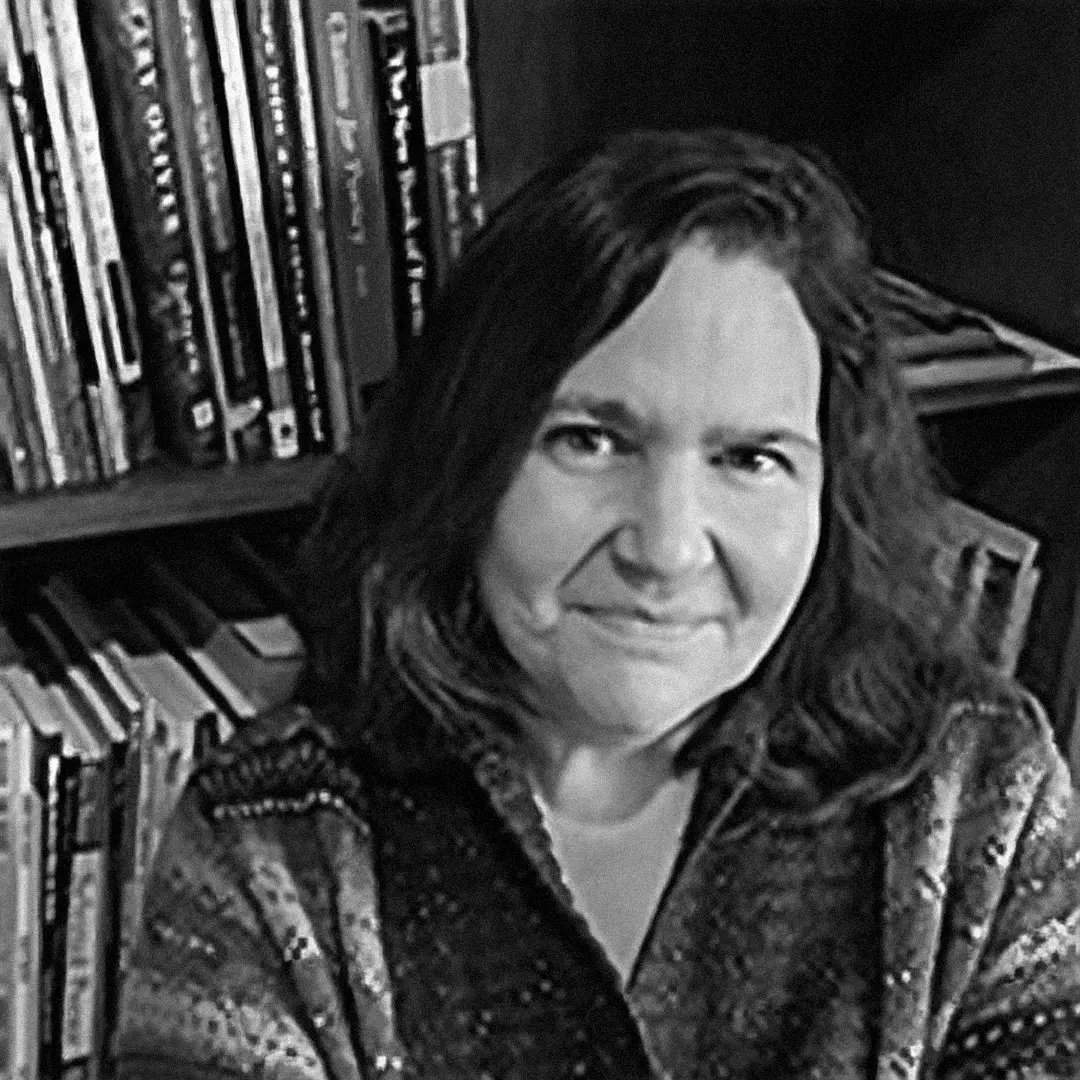
Sally Rosen Kindred is the author of Book of Asters and No Eden, and her latest chapbook is Says the Forest to the Girl (Porkbelly Press, 2018). Her poems have appeared in The Gettysburg Review, The Missouri Review's Poem-of-the-week web feature, and Kenyon Review Online. She is a poetry editor for The Baltimore Review.
© Bear Review 2025
ALL RIGHTS RESERVED
Site Design + Build
October Associates
